The most reliable way to save money is to decide what you are saving for, find where your money actually goes, cut the costs that repeat every month, and move the savings automatically on payday before you can spend them. A change to a recurring cost keeps paying off every month once it is made, while a one-time sacrifice has to be repeated.
This guide gives you a plan in that order, with the biggest levers first and a worked example showing how modest changes add up over a year. Examples use US dollars and invented figures.
Start with a reason and a number
“Save more” is hard to act on. “Save $1,200 for a car repair fund by next June” tells you how much to put aside each month and whether you are on track. Pick one or two goals to begin with, such as a starter emergency fund and one near-term purchase.
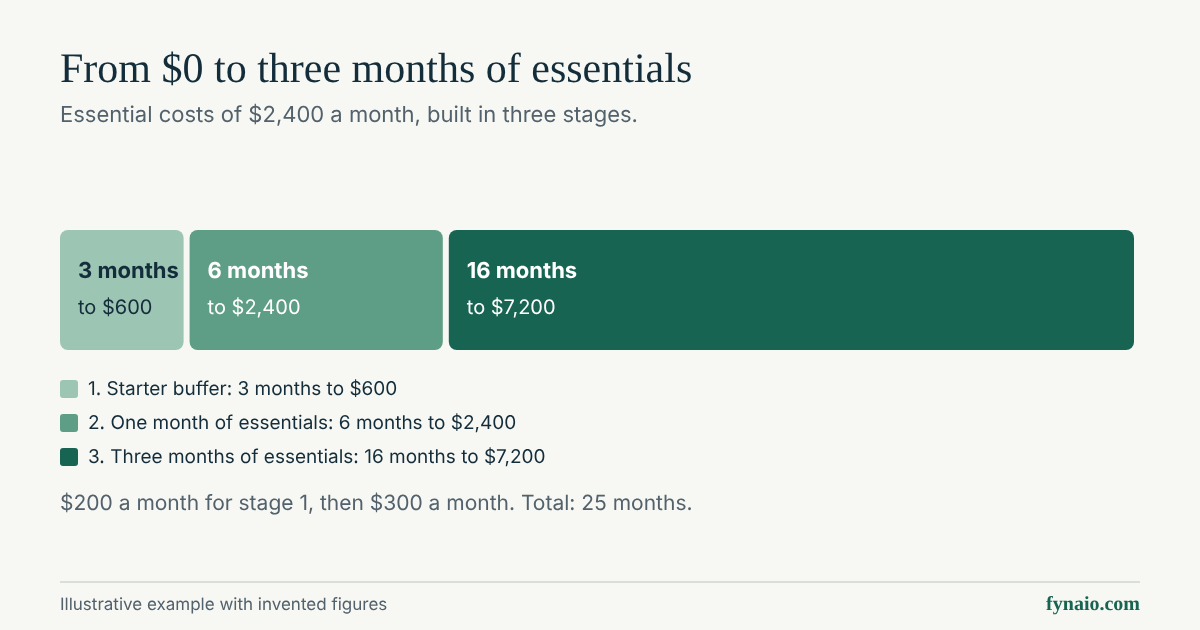
The savings goal calculator turns a goal and a date into an exact weekly or monthly amount. If you have no emergency savings yet, start there: a small cushion keeps an unexpected bill from undoing every other goal. The emergency fund guide shows how to build one in stages.
See where the money goes
Savings come from somewhere. According to the Bureau of Labor Statistics, the average US household spent $78,535 in 2024, about $6,545 a month. Housing took 33.4 percent and transportation 17.0 percent, so those two categories alone accounted for about half of all spending. Food was next at 12.9 percent, or about $847 a month, and $3,945 of the year’s food spending went on meals away from home.
Your own numbers matter more than averages. Go through the last two or three months of bank and card statements and total each category, using a list of budget categories so nothing is missed. Start with the lines that are larger than you expected.
Cut recurring costs first
A cost you pay every month saves you money every month once it is gone. Review these before looking for one-time savings:
- Subscriptions and memberships. List every repeating charge from your statements. The Federal Trade Commission advises watching your bank and card statements for charges you did not expect, especially after free trials. The subscription cost calculator shows what each one costs per year, and the guide to cancelling subscriptions covers stopping the ones you drop.
- Phone, internet and insurance. Compare your current plan with what you actually use, and ask your provider about cheaper plans. Price the same coverage elsewhere before your policy renews.
- Bank and account fees. Monthly maintenance fees and overdraft charges buy you nothing. Read your account terms for ways to avoid them, or compare accounts that do not charge them.
Lower everyday costs
Food
Because meals away from home make up a large share of average food spending, shifting a few of them to home cooking can be one of the larger changes, as long as you count the extra groceries those meals need. At the store, compare items by unit price rather than package price. The National Institute of Standards and Technology publishes a unit pricing guide because shelf labels do not always make this comparison easy. The unit price calculator converts sizes for you. To set a weekly food limit from your own receipts, see the grocery budget guide.
Energy at home
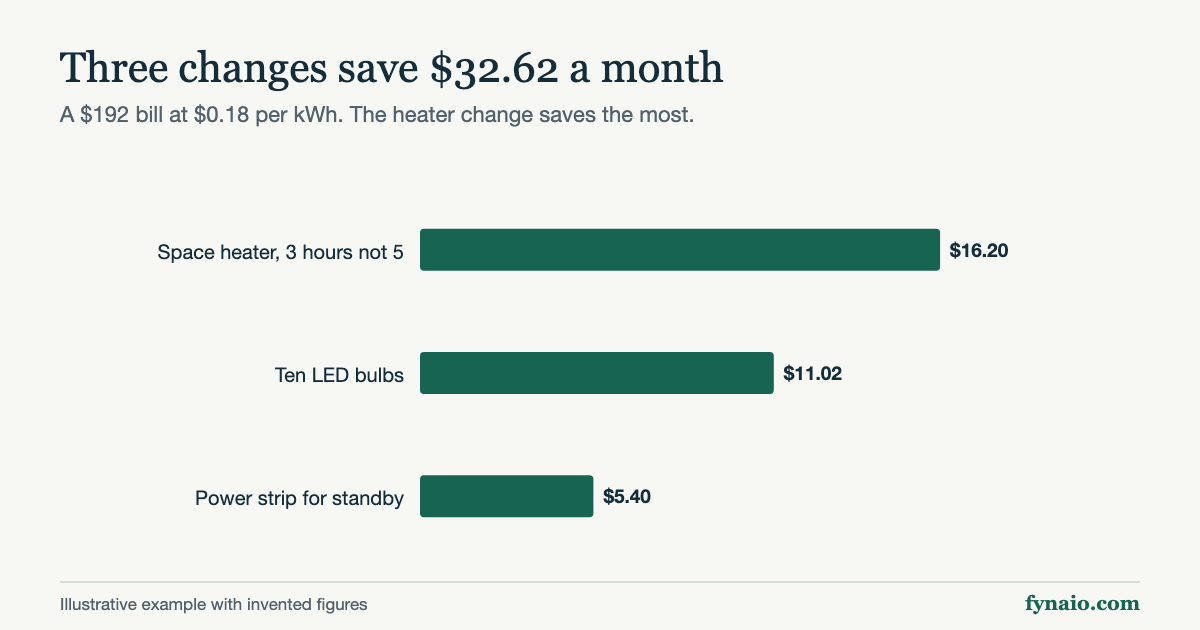
The Department of Energy’s Energy Saver Guide says you can save as much as 10% a year on heating and cooling by turning your thermostat down 7–10°F for 8 hours a day in fall and winter, and up in spring and summer. The same guide estimates that sealing air leaks can save 10 to 20 percent on heating and cooling bills.
Transport
Combining errands, keeping tires properly inflated and comparing fuel prices on your usual routes all reduce a cost most households pay every week.
Make saving automatic
Set up a recurring transfer from checking to a separate savings account on the day you are paid. Saving first and spending what is left means the amount is set before day-to-day spending starts, instead of depending on what happens to remain at the end of the month. Start with an amount small enough that you will not cancel it, then raise it each time you cut a recurring cost.
Put one-off money to work too. A tax refund, a cash gift or a bonus can complete a savings goal in one step if you move it before it blends into everyday spending.
Example: finding $135 a month
This invented household reviews its statements and makes four changes. The energy figure assumes $120 a month of heating and cooling and the full 10 percent that the Department of Energy says is possible, so treat it as an upper estimate.
| Change | Saved per month |
|---|---|
| Cancel two unused subscriptions ($15.99 and $12.01) | $28 |
| Cook at home more: dining out from $250 to $150, groceries up $40 for the extra meals | $60 |
| Switch five regular grocery items to lower unit prices | $35 |
| Thermostat schedule, 10% of $120 heating and cooling | $12 |
| Total | $135 |
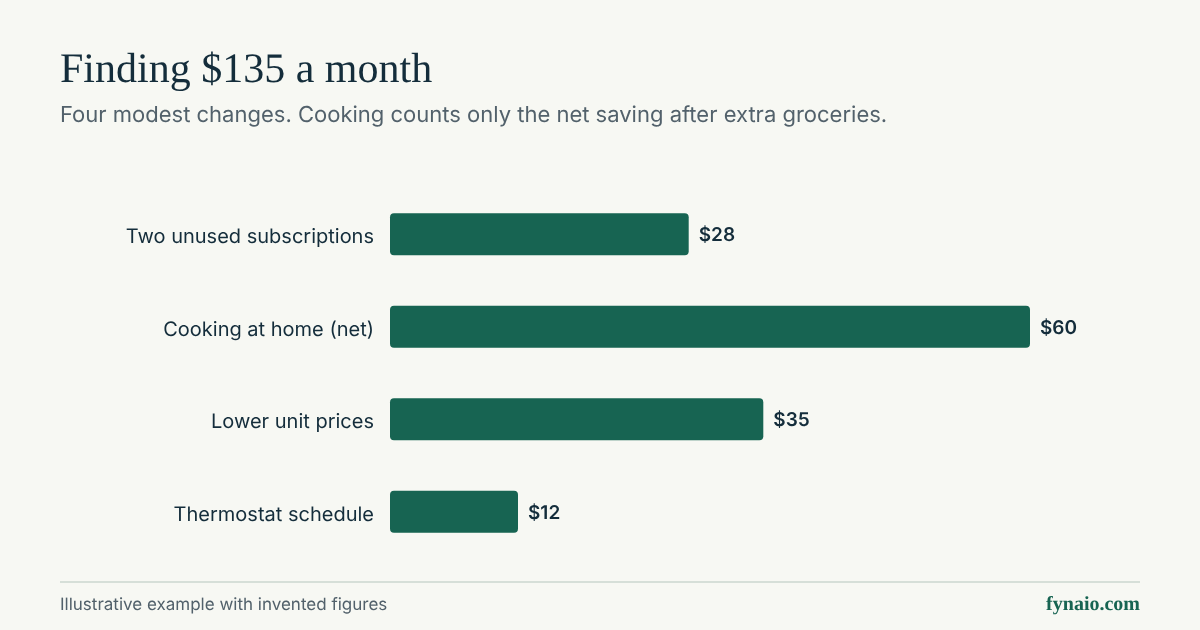
The cooking line counts only the net saving: $100 less spent eating out minus the $40 of extra groceries. Counting the full $100 would overstate what is freed up. Moved automatically each payday, $135 a month becomes $1,620 over a year. None of the changes is dramatic. The cancelled subscriptions stay cancelled, but cooking at home and checking unit prices still take some effort each week. If you set up a 52-week savings challenge alongside them, the habit of saving every week becomes visible on a tracker you can print.
What to avoid
- Cutting too hard. A plan with no room for things you enjoy tends to collapse after a few weeks. Keep a modest fun budget.
- Buying in bulk you will not use. A lower unit price only saves money if the food is eaten before it spoils.
- Letting savings sit in checking. Money that stays where you spend from tends to get spent. Keep it separate.
- Chasing tiny savings while ignoring big lines. Check housing, transport and insurance before spending time on small coupons: a small percentage off a large bill can add up to more than many small discounts.
A one-hour savings review
- Pick one goal and a date, then calculate the monthly amount.
- Total each spending category from two or three months of statements.
- List every recurring charge and mark each one keep, downgrade or cancel.
- Ask one provider (phone, internet or insurance) for a cheaper option.
- Choose one food change and one home energy change.
- Set an automatic transfer for payday, equal to the savings you found.
- Check your progress next month and raise the transfer if you can.