Budgeting with irregular income means planning around a month you can count on, not the average. If your pay changes from month to month, as it often does with freelance work, tips, commission or seasonal jobs, set your regular budget at a level a low month can support, keep the extra from good months in a reserve, and use that reserve to cover the low months. This guide shows the method step by step with an invented three-month example in US dollars.
It is general budgeting education. It does not cover tax calculations; if no tax is taken from your pay, check what you owe and set that money aside separately.
Step 1: Look at what you actually received
Gather pay stubs, invoices and deposits for the last six to twelve months and record the amount and date of each payment. The CFPB’s income and benefits tracker suggests recording net pay, the amount you actually receive, and notes that income can be regular, irregular, seasonal or one-time. It also points out that some benefits can only be used for a particular purpose, so keep those separate from income you can spend on anything.
Find your lowest recent months as well as the average. The FTC’s guide to making a budget suggests that if you are not paid every month, you can add up last year’s income and divide by 12 to estimate a monthly figure. That average is useful for yearly planning, but a budget built on it will still run short in a below-average month.
Step 2: Set a baseline budget a low month can cover
List essential costs first: housing, utilities, food, transport, insurance and minimum debt payments. Add a small amount for everything else. That total is your baseline budget, the amount you pay yourself every month from your reserve, whatever comes in.
If even your essentials are higher than your low months, the gap is real and needs a decision: lower a fixed cost, add a source of income, or build a larger reserve before relying on this method. The list of budget categories can help you sort essentials from flexible costs.
Step 3: Run every month through a reserve
Pay your income into a holding balance first. From it, take the same baseline amount each month. In a good month, the extra stays in the reserve. In a low month, the reserve makes up the difference.
In this invented example, Casey’s baseline budget is $2,400 a month and the reserve starts at zero.
| Month | Income received | Baseline budget | Added or used | Reserve at month end |
|---|---|---|---|---|
| Month 1 | $3,600 | $2,400 | +$1,200 | $1,200 |
| Month 2 | $1,700 | $2,400 | −$700 | $500 |
| Month 3 | $2,900 | $2,400 | +$500 | $1,000 |
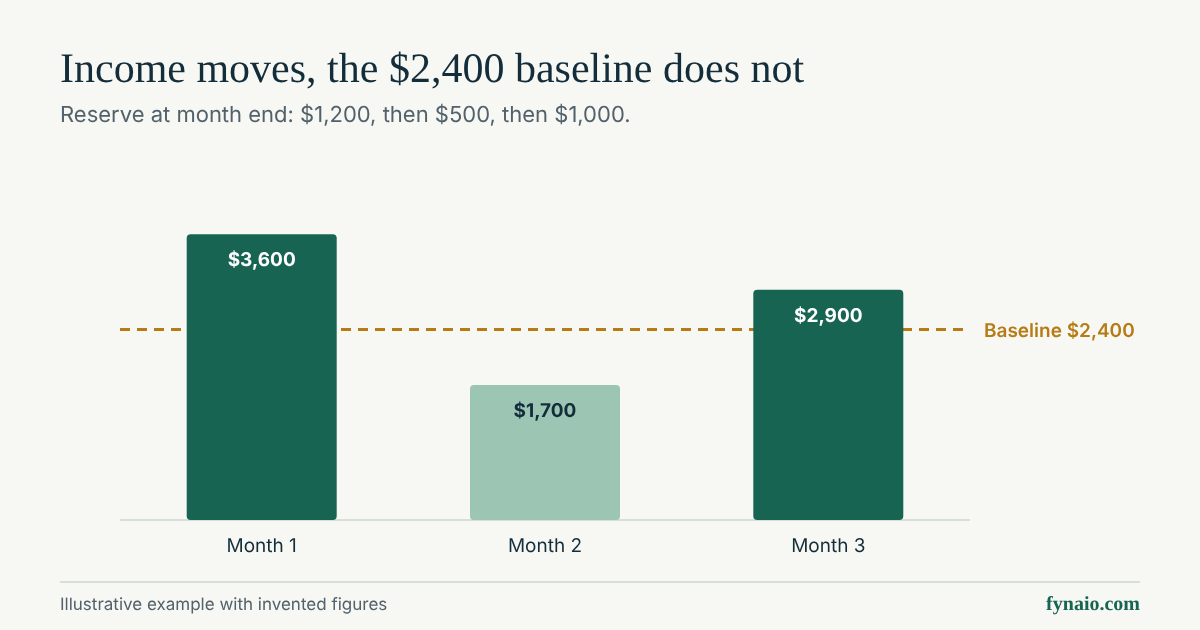
Casey’s income varied by $1,900 between the best and worst month, but the money Casey lived on stayed at $2,400 every month. The CFPB’s cash flow budget uses the same carry-forward idea week by week: start with your balance, add income, subtract expenses, and carry the ending balance forward.
What happens if the low month comes first
Now suppose the same months arrive in a different order and month 2 comes first. Casey starts with no reserve and receives $1,700 against a $2,400 baseline, a shortfall of $700. Cutting the $300 of flexible spending in the baseline still leaves $400 short.
This is why the first goal is to build a starting reserve before you need it. Until the reserve can cover at least one low month, keep the baseline as low as you can, put every good month’s extra into the reserve, and know in advance which bills you would contact first if you could not pay on time. An emergency fund is a separate safety net for unexpected costs; the reserve here is for the expected ups and downs of your pay.
How big the starting reserve should be
Use the records from Step 1. The gap between your baseline and your lowest month shows what one bad month costs: for Casey, $2,400 − $1,700 = $700. A first reserve of $700 covers one month like that; $1,400 covers two in a row. If your records show low months tend to come together, aim for the larger figure before treating the reserve as built.
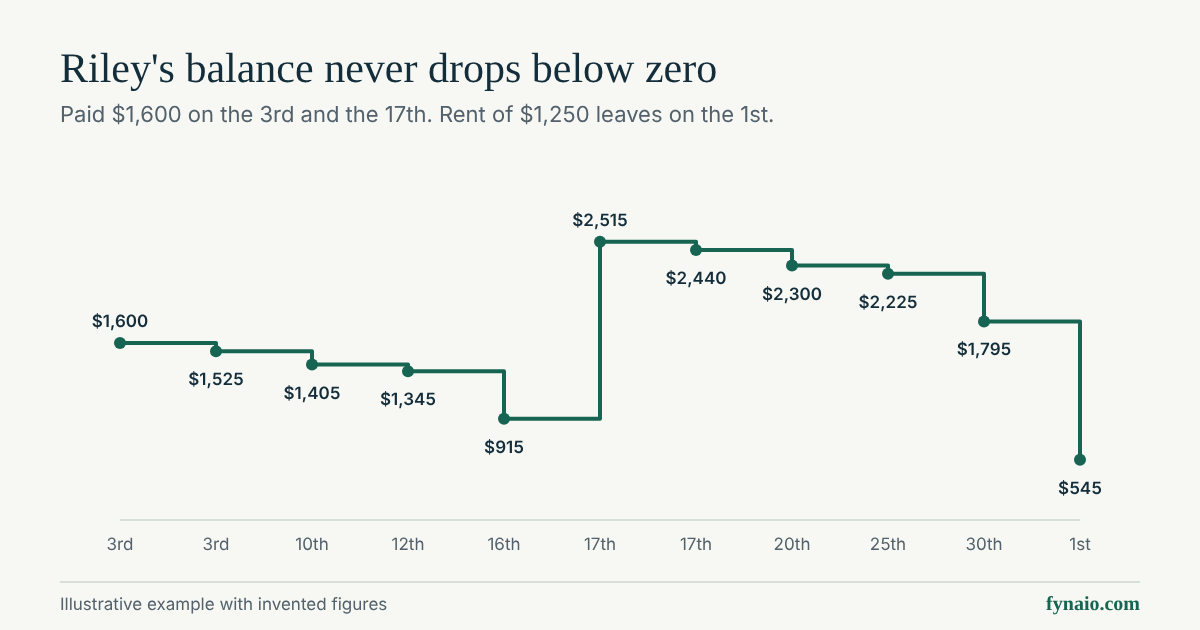
Dates matter as well as amounts. A payment that arrives on the 25th cannot pay rent due on the 1st of the same month, even if the month’s total is fine. Note the date each payment actually arrives next to the amount, and plan bills from money already in the holding balance rather than money expected later in the month.
Plan good months on purpose
A large payment can feel like extra money, but some of it belongs to the low months ahead. Before spending a good month’s surplus, check the reserve: once it covers a few low months comfortably, you can direct the extra to goals such as an emergency fund or known yearly costs. The monthly budget template can hold the baseline budget, and you can track the reserve in one extra line.
Review the baseline every few months
Compare the last three months of income with the baseline. If your low months have improved and stayed higher, you can raise the baseline slowly. If they have dropped, lower it before the reserve runs out, not after. A baseline that is a little too cautious costs you some spending now; one that is too high can leave bills unpaid later.